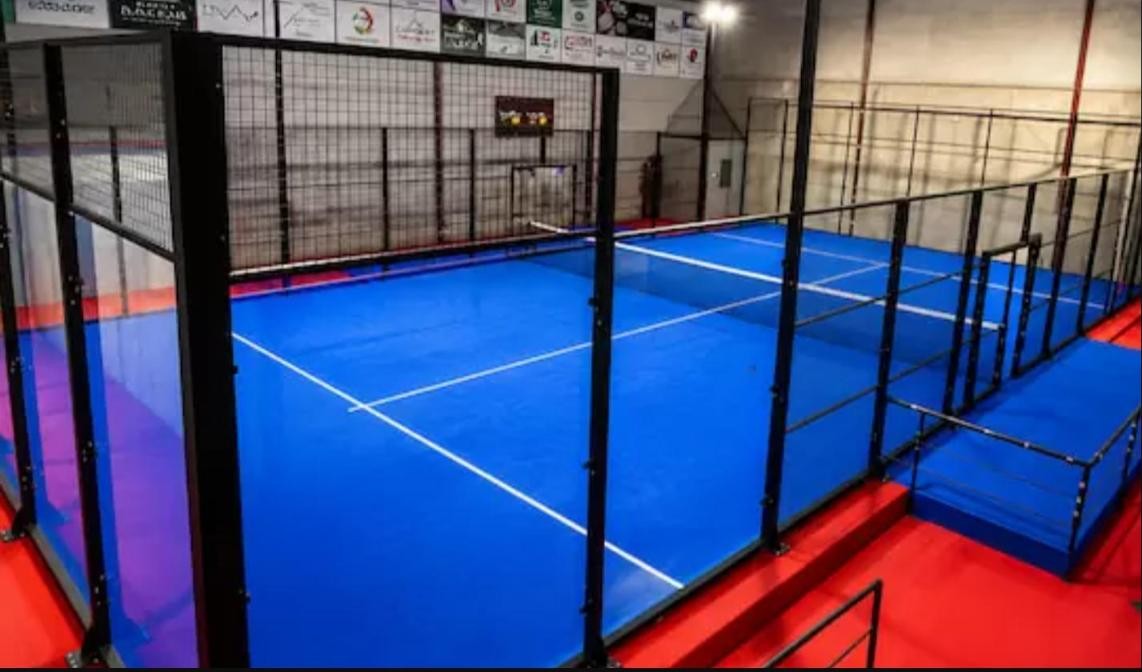
How much does it cost to start a padel business? The honest answer is that it depends on the site, the number of courts and whether you build indoor or outdoor, but every project is made up of the same cost blocks. Padel is one of the fastest-growing sports in the UK, and many operators, tennis clubs and investors are looking at it as a new venture. This guide breaks down the start-up and running costs, and shows how to set up a padel court business step by step with a realistic budget.
What are the main costs of starting a padel club?
When people ask how much it costs to build a padel club, they often think only about the courts. The courts are usually the largest single investment, but they are one part of a wider budget that also covers the site, the building, planning and the launch. Listing every block from the first day avoids surprises later in the project.
- Courts. The model, glass, turf, lighting and installation, priced per court.
- Site and property. Buying or leasing land or a building, plus legal fees.
- Groundworks or fit-out. A new concrete base and drainage outdoors, or adapting an existing building indoors.
- Planning. Permission, drawings and any studies on lighting or noise.
- Facilities. Reception, changing rooms, toilets and parking.
- Systems and launch. Booking software, branding, marketing and opening events.
- Working capital. Cash to cover the first months while bookings grow.
Each of these depends on your project, so the best approach is to get real prices for the biggest items, starting with the courts and the site.
How much does it cost to build padel courts?
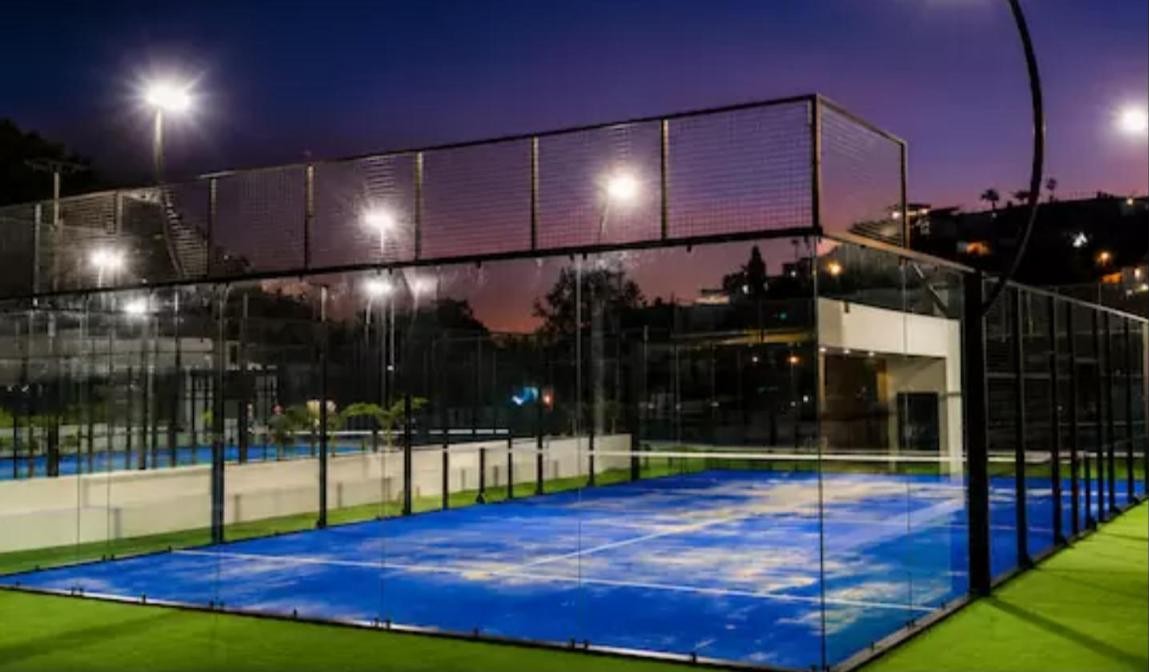
The cost to build a padel court depends on real variables rather than a single list price. Indoor or outdoor use, whether a canopy is included, the court model, glass thickness, turf specification, lighting output, the condition of the site and the delivery location all change the figure. Panoramic and full panoramic courts cost more than a court with pillars.
Building more than one court reduces the average cost per court, which is one reason many clubs open with several courts at once. We provide a written quote per court and for the full project, so you can put accurate numbers into your business plan. Our guide on the cost of building a padel court in the UK explains each factor in detail.
Is an indoor or outdoor padel club cheaper to open?
Outdoor courts usually cost less to build, but they need groundworks, drainage and weather-ready structures, and British weather limits playing time unless you add a canopy. An indoor padel club costs more in property and fit-out, yet it can sell bookings all year and in the evenings, which often makes the revenue stronger over time.
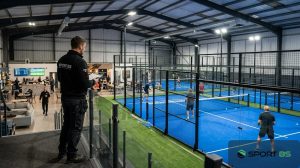
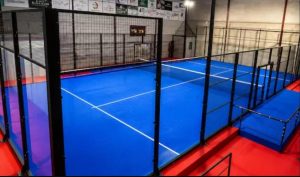
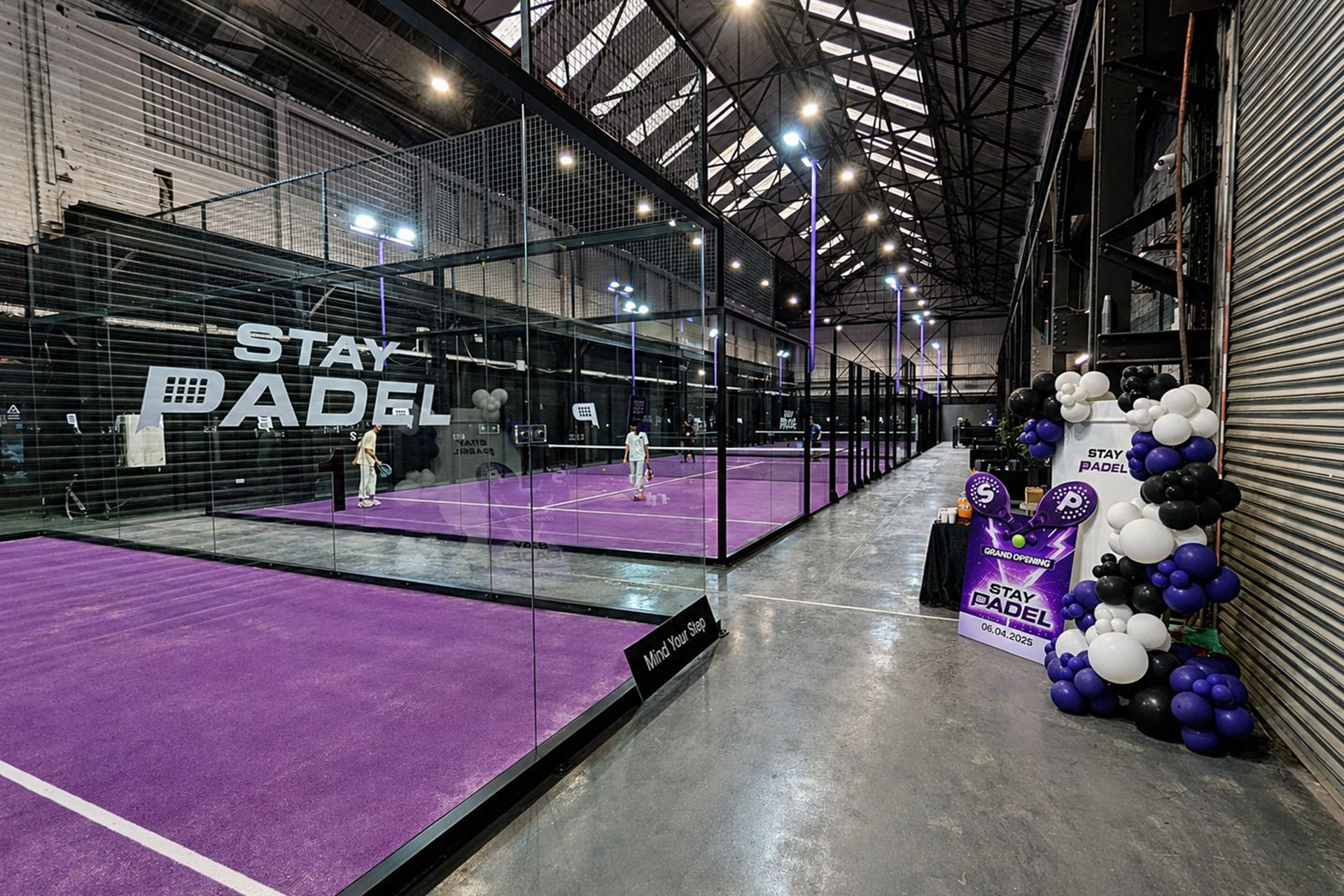
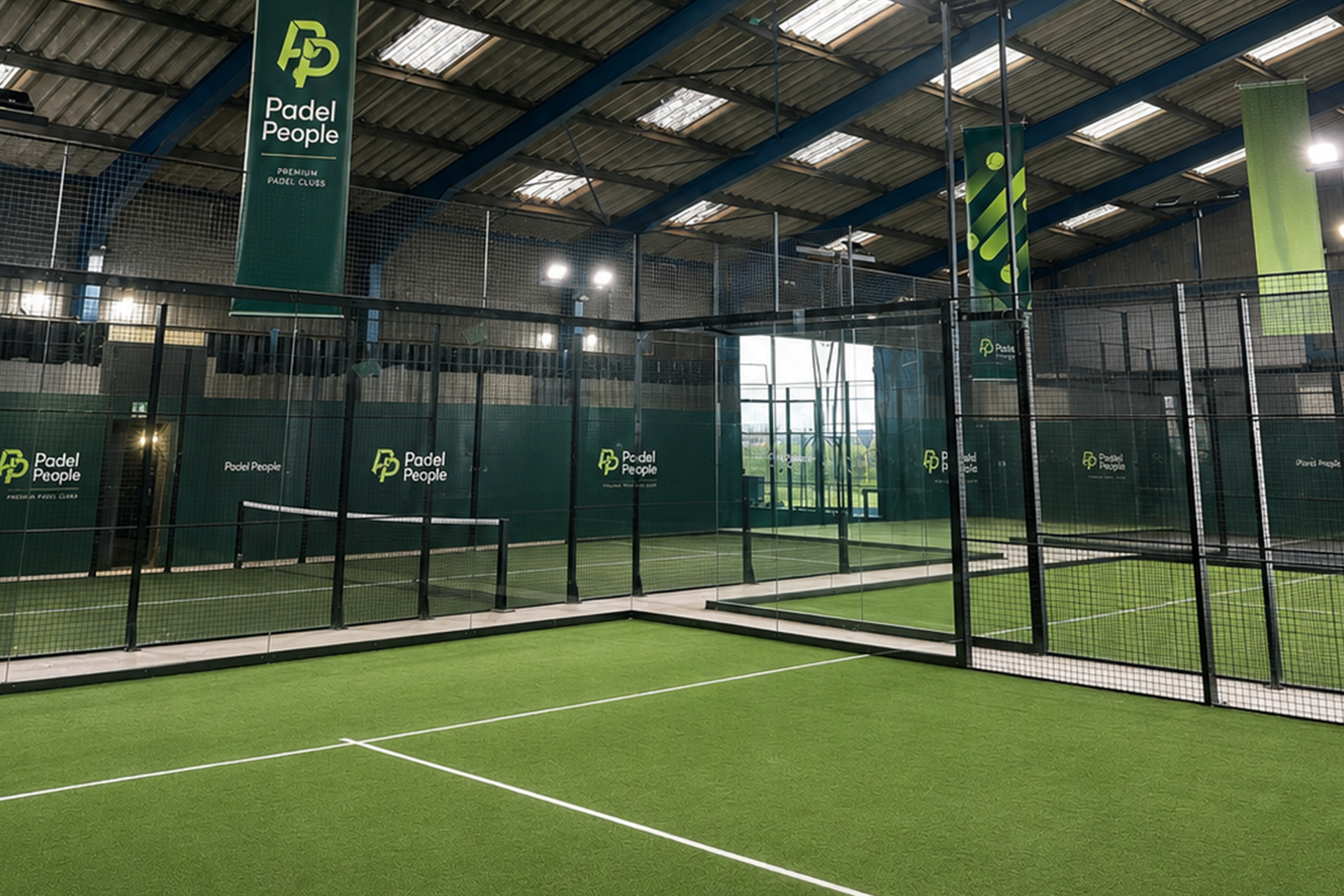
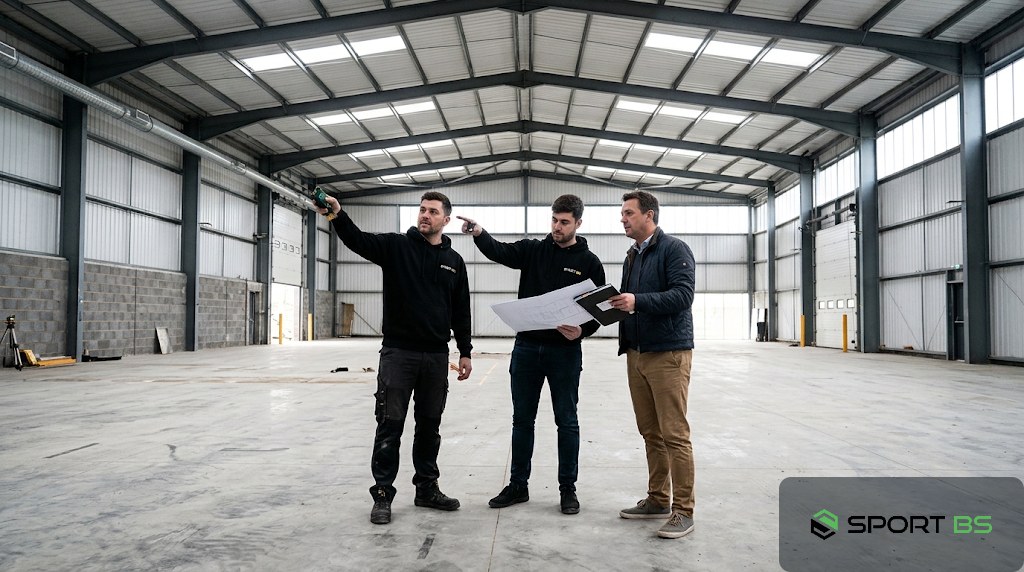
For indoor projects, three checks come first: clear height above the playing area, which the FIP sets at a minimum of 6 metres and ideally 8, access for the glass panels, and a slab that can take the structure. Most of our UK projects are indoor courts built inside existing buildings, such as the venues in Manchester, Hull, Boston and Southwold shown in our padel court projects.
What are the running costs of a padel facility?
Start-up costs get the club open, but running costs decide whether it stays profitable. These are the costs you pay every month or every year, whether the courts are full or not, so they need to be in your financial model from the beginning.
- Rent or mortgage on the property or land.
- Staff for reception, coaching and management.
- Energy, especially lighting and heating in indoor venues.
- Insurance for the facility and its players.
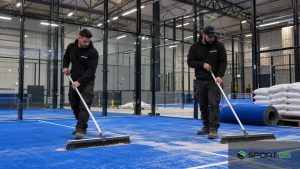
- Court maintenance, such as brushing turf, topping up sand and cleaning glass.
- Booking software, marketing and day-to-day supplies.
Good-quality courts help keep maintenance costs low, and efficient LED lighting reduces energy use while extending opening hours.
How do you set up a padel court business step by step?
Opening a padel facility follows a clear order. Following these steps helps you control the budget and avoid commitments you may regret, such as signing a lease before checking the building or ordering courts before planning is clear.
Step 1. Check local demand
Look at the local market: nearby tennis and padel clubs, how busy they are at peak hours and which groups of players are not yet served. Talk to coaches and players, and read guidance from the LTA, which governs padel in Great Britain, about what venues need to succeed.
Step 2. Find and assess the site
Choose land or a building with good access, parking and enough space for the number of courts you want. Check clear height, the slab and drainage, and speak to the local authority early about planning, lighting and noise.
Step 3. Define the courts and design
Decide how many courts to build, indoor or outdoor, and which model suits your players. Our Titan, Dream and Elite models are compared in the padel court portfolio, and the design stage also covers colours, lighting and branding.
Step 4. Build the business plan and funding
With real prices for the courts and site, build a business plan with revenue from bookings, coaching, memberships and events, set against your running costs. This shows your break-even point and expected ROI, and it is the document lenders and investors will want to see before funding the project.
Step 5. Construction and installation
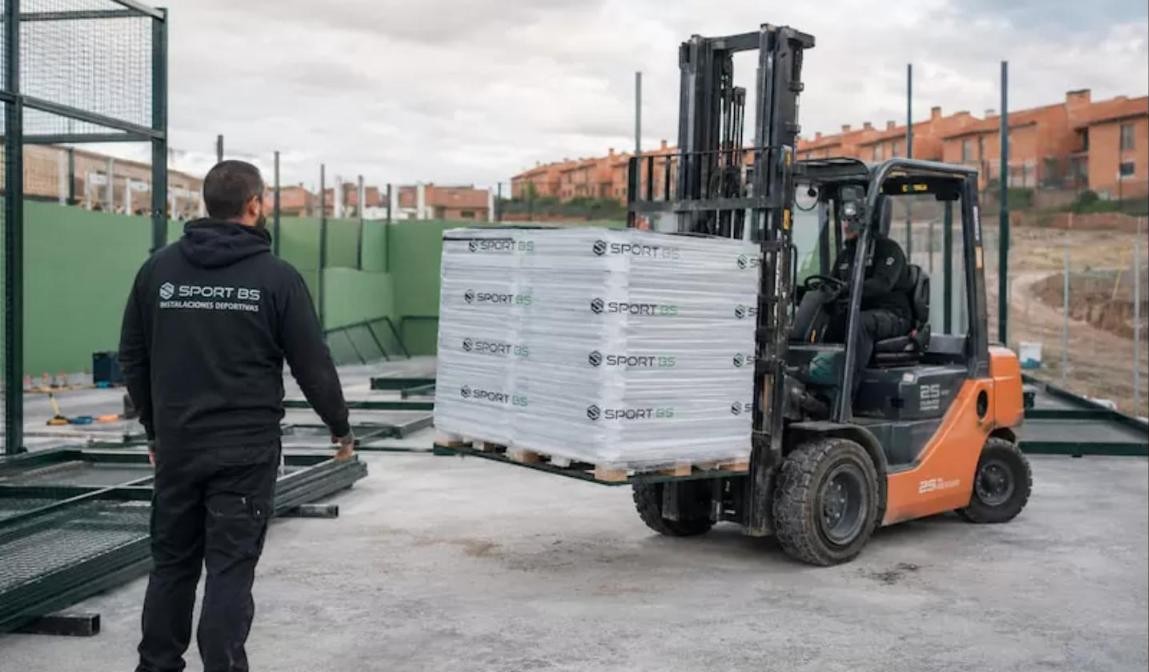
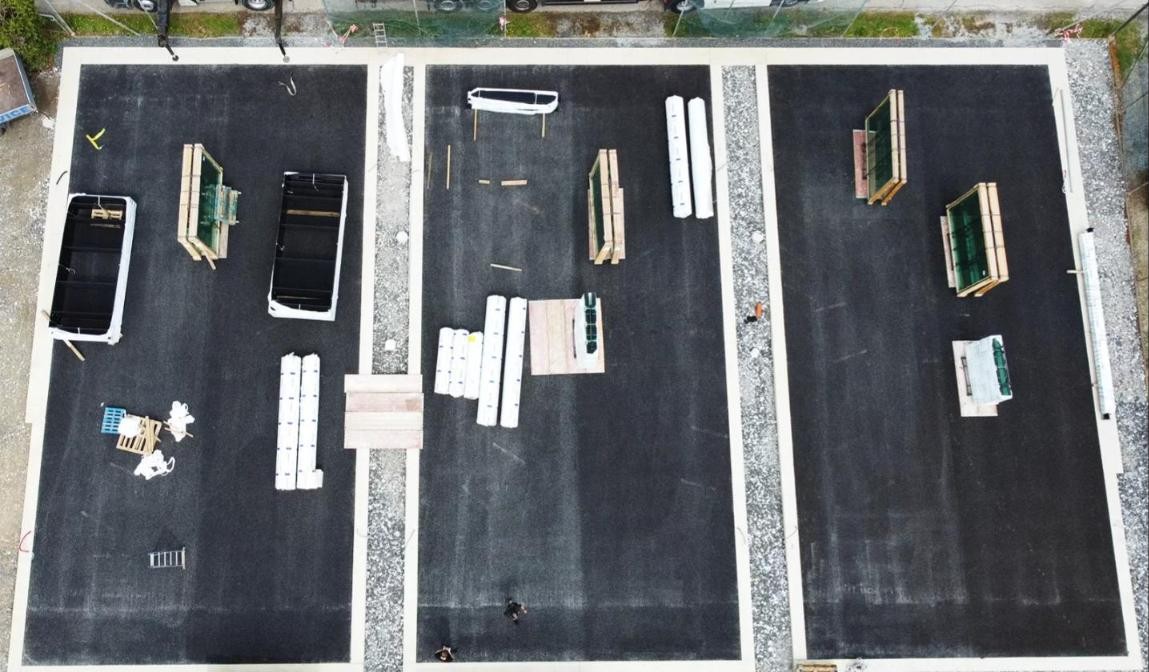
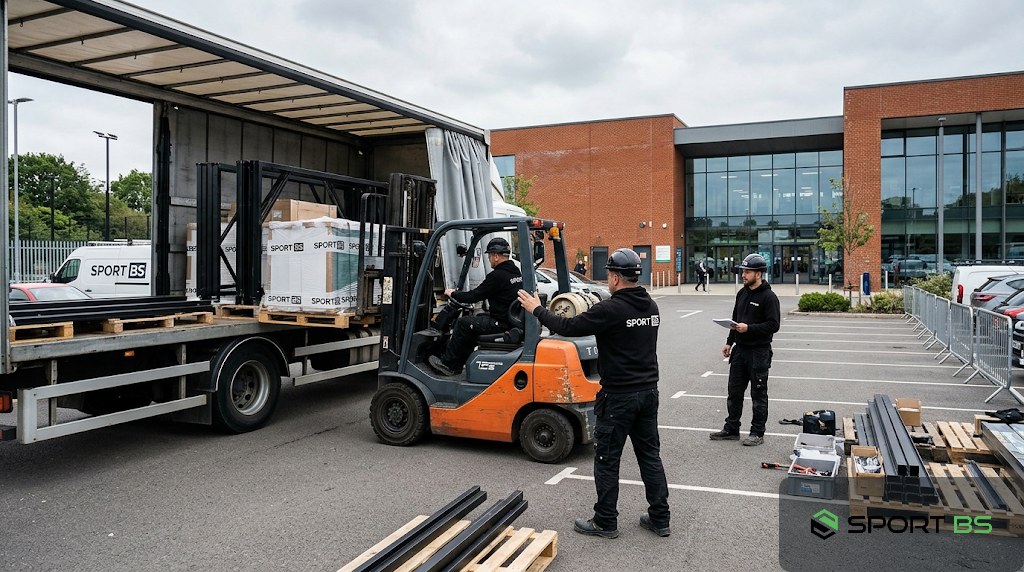
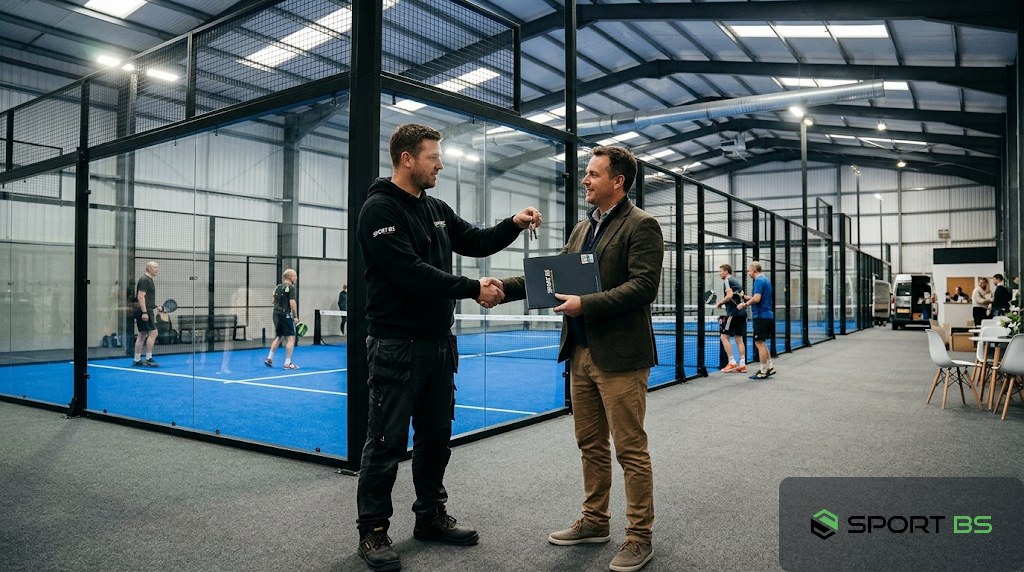
Once funding and planning are in place, the site is prepared and the courts are installed. With SportBS, our own team handles delivery, installation, inspection and handover, so one company is responsible for the courts from start to finish.
Step 6. Launch and grow
Set up booking software and pricing, then start marketing before opening day with pre-launch memberships, open days and social media. Many operators also watch videos from other club owners on YouTube to learn what works when you launch a new venue.
How do you make the investment pay back?
A padel club earns money from court hire, usually priced per hour, plus coaching, memberships and events. Profitability depends on utilisation, which means how many of the available hours are booked, the price per hour and how well running costs are controlled. Whether you call it a padel club, a padel centre or a sports venue, the same numbers decide the result.
The quality of the courts matters too. Players come back to venues where the court plays well, the lighting is good and problems are fixed quickly. Every SportBS court comes with a five-year warranty, a full compliance pack and technical support after handover. Read more about our padel court installer service and how we work on site.
Do you have more questions about starting a padel business?
These are some of the questions we hear most from people planning to open a padel facility. For more answers, read our padel court FAQs or find other guides on our padel court blog.
How much does it cost to buy a padel court?
The price of a court depends on the model, the glass and turf specification, the lighting and whether it is indoor or outdoor. We send a written quote per court that includes delivery and installation in the UK, so you know exactly what you are buying and what is included.
Is owning a padel court profitable?
It can be, especially when the court sits in an area with strong demand, good access and evening lighting. Courts added to an existing tennis club, gym or hotel often pay back sooner, because staff and customers are already there. A standalone club usually needs more courts to cover its fixed costs.
Is padel an expensive hobby?
For players, padel is one of the more affordable racket sports, because it is played in doubles and the court hire is shared between four people. That accessibility is one of the reasons demand keeps growing, and it is good news for anyone planning a new club.
Ready to price your padel business?
Tell us about your site, how many courts you are planning, whether they will be indoor or outdoor and where the venue is in the UK. We will send a free written quote, the compliance pack and examples of similar projects, so you can start your padel business with real numbers. Contact us by phone, WhatsApp or the form, and our team will help you take the first step.